Making boxes is only part of the process. Getting them off the production floor, palletized, and ready to ship is just as important.
Between the converting floor and the truck, there’s a series of steps that decides how your order shows up at your dock: squared, secured, on the right pallet and ready to unload. In the industry, this is called finished goods handling. Here’s how it works and why it matters to the people on the receiving end.
What is a finished unit?
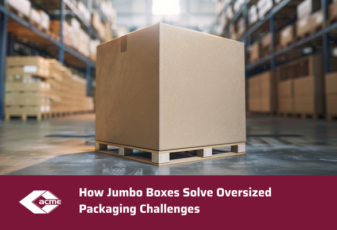
Boxes leave a converting machine bundled and stacked into what’s called a finished unit, a large stack of bundled boxes. That unit is what eventually arrives at your facility. Everything that happens to it after it leaves the machine shapes what you receive.
The steps between converting and your dock
1. Identification. Each unit is tied to its order and destination so it ends up on the right truck. Acme tracks this digitally, so they can see where every unit is and what it needs.
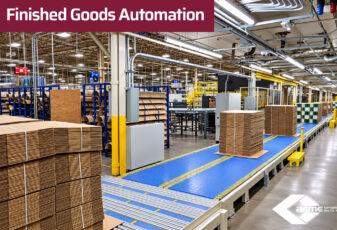
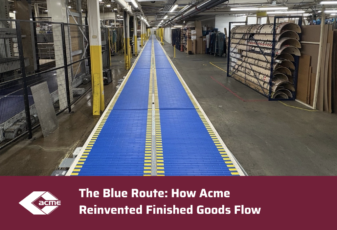
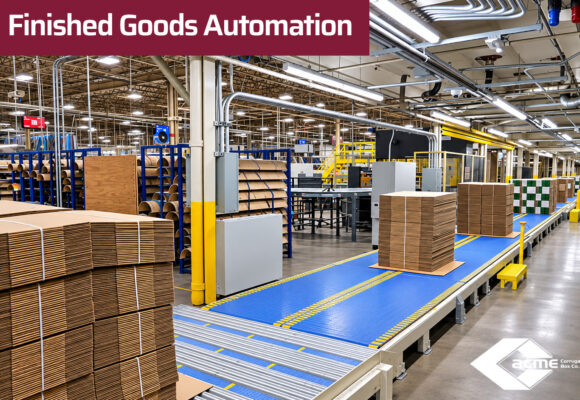
2. Conveying. Conveyors carry units from the converting machines toward the shipping area.
3. Banding. The stack is squared and strapped. A square, tightly banded unit stacks well, holds together in transit and is easier for your team to handle.
4. Palletizing. Some customers need units on pallets; others don’t. It depends on how each facility receives and stores its materials.
5. Stretch wrapping. For orders that call for it, stretch wrap helps keep the load together and protected from dust and moisture on the road.
6. Loading. Finished units are loaded onto trailers for delivery.
Why these details matter to you
No two customers receive their boxes exactly the same way. Strapping, pallet and wrap requirements vary from order to order. When those details are right, your receiving team can unload, store and send boxes to your packing lines without extra handling or rework.
Why flow matters as much as speed
Finished goods handling also affects how smoothly the whole plant runs. Converting machines need somewhere to send their finished work. If units back up on the way to shipping, those machines have to stop. A plant can only move as fast as its slowest step.
That’s why keeping the finish line in step with converting is part of keeping delivery reliable, especially for customers who count on just-in-time delivery.
Planning ahead at Acme
At Acme Corrugated Box, that’s where we’re focusing next. As new high-speed converting lines add volume, we’re planning a finished goods upgrade for 2027, designed to add capacity and backup so orders keep moving on schedule.
Want to learn more?
Join us for our live webinar, Keeping Acme Moving Forward: Finished Goods Automation, on November 17 at 1PM EST. Acme Engineering Manager Ryan J. Stashko will take you behind the scenes showing how finished units travel from our converting machines to shipping, exploring how our advanced automation makes this process possible today. We’ll also give you a sneak peek at our next major upgrade coming in early 2027, designed to take our finished goods automation capabilities even further.